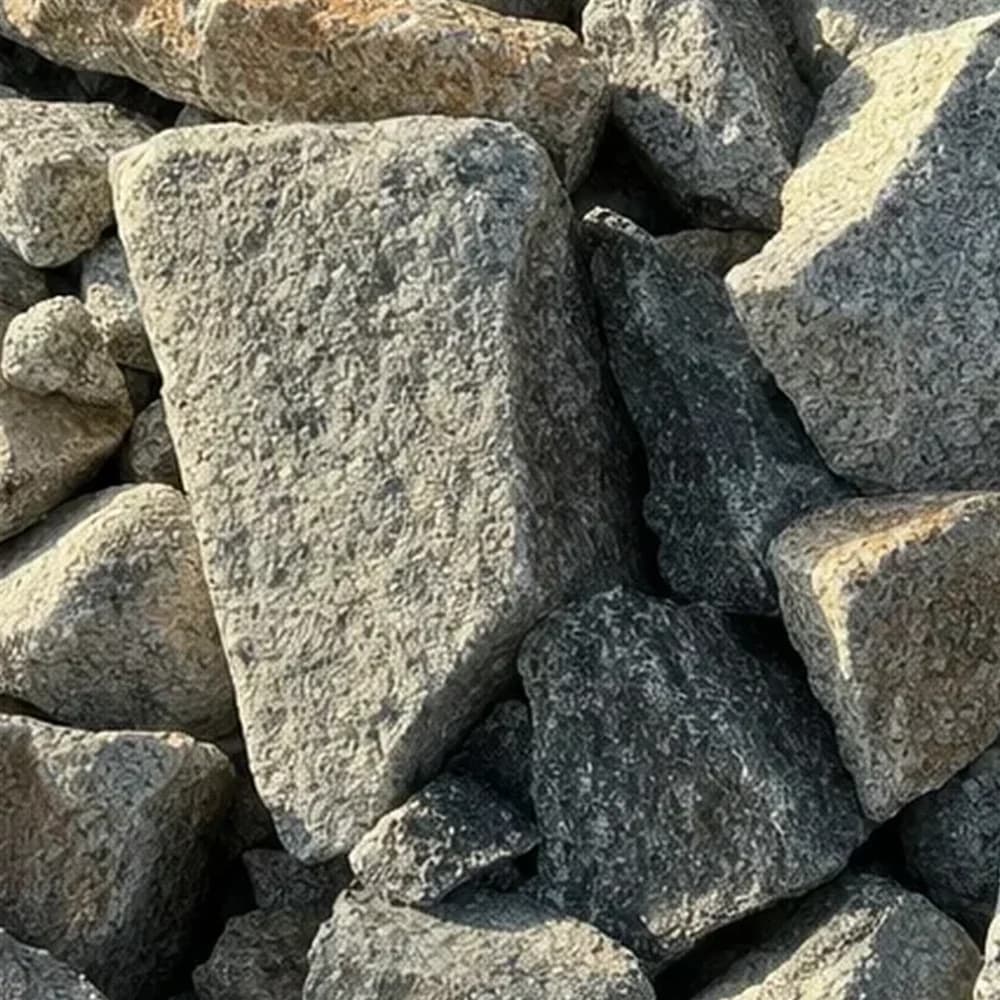
Rip rap calculator for South Dakota
Figure bank and shoreline tonnage from the installed layer depth. Armor stone requires more depth than ordinary landscape material.
Enter your project dimensions
A ton of riprap will cover around 17 square feet. That is correct. Because armor rock is installed in layers 12 inches thick or more, each ton covers about one tenth the area of landscape stone. This calculator uses a 3,100 lb per cubic yard density and applies to material generally sized 4 to 12 inches and larger.
How to measure a bank for armor stone
- Take the slope measurement along the bank face rather than across level ground, then multiply it by the channel or shore length.
- For erosion work, make the layer 1.5 to 2 times the largest rock. A 12-inch depth is the practical minimum.
- To find tons: cubic feet / 27 = cubic yards, then x 1.55.
Tons of coverage
| Layer thickness | 1 ton covers | Tons per 100 sq ft |
|---|---|---|
| 12 inches | ≈ 17 sq ft | 5.7 |
| 18 inches | ≈ 12 sq ft | 8.6 |
| 24 inches | ≈ 9 sq ft | 11.5 |
Installation details for effective stone armor
- Start with a base below the rock: install non-woven geotextile or use 3-4 inches of #4 stone. Stone placed straight on soil can look sound for a season, then settle when erosion takes away the support underneath.
- Bury the toe first. Set the lowest row beneath the waterline or the anticipated scour depth, as failure usually starts at the bottom.
- Shape the bank to 2:1 or flatter before installing rock. Anything steeper needs engineering, not simply additional stone.
- Use a machine or hand work for the exposed top layer, nesting each stone so it locks with the next instead of stopping wherever it lands.
- Extend the apron at a culvert outlet 4-6 pipe diameters downstream, where flowing water cuts into the ground.
Example: 50 feet of pond bank
A shoreline bank with a 6-foot face over 50 feet has 300 square feet of area. For an 18-inch depth: 300 x 1.5 = 450 cubic feet = 16.7 cubic yards, or about 26 tons of riprap, 27 including the small allowance. Put down a roll of geotextile, or use about 4 tons of #4 stone as the rock base. Check the truck path before ordering. The final 20 feet near a pond edge can trap a loaded truck, and relocating stone doubles the cost.
Following the first major storm
After the water recedes, make one pass along the bank. Watch for rock that has moved at the toe, newly exposed soil between stones, or fabric visible through the cover. Put displaced stone back in place, use reserve material to fill sparse areas, and inspect the discharge apron for erosion. Ten minutes of checking a couple of times each year is all the upkeep required. Riprap is meant to carry the protection work without ongoing attention.
A quick guide to stone sizes
Choose the rock size based on water force. Riprap from four to eight inches is suitable for pond banks, slow streams, and downspout outlets. Material from eight to twelve inches suits faster channels and shorelines exposed to boat wake. Highway and spillway work has its own engineered specifications and layer depths, so use the project drawings. When deciding between sizes, choose the larger rock and increase layer thickness.
Riprap sizing, tonnage, and installation
How can I estimate the rip rap I need?
What area will 1 ton of riprap cover?
How much space does 1 ton of rip rap take up?
What is the cost of 1 ton of rip rap?
What layer depth should rip rap have?
Is hand placement possible for rip rap?
Other calculators
Protect the bank with stone armor.
Order RipRap by the ton with free delivery, along with #4 bedding stone for the base below it.